The first generation computers were huge, slow, expensive, and often undependable. In 1946 two Americans, Presper Eckert, and John Mauchly built the ENIAC electronic computer which used vacuum tubes instead of mechanical switches. The ENIAC used thousands of vacuum tubes, which took up a lot of space and gave off a lot of heat just like light bulbs. The vacuum tube was an extremely important step in the advancement of computers. Vacuum tubes were invented around the same time the light bulb was, by Thomas Edison and worked very similar to light bulbs. It's purpose was to act like an amplifier and a switch for electronic circuits. Without any moving parts, vacuum tubes could take very weak signals and make the signal stronger. Vacuum tubes could also stop and start the flow of electricity instantly. It was these two properties made the ENIAC computer possible. The ENIAC gave off so much heat that they had to be cooled by gigantic air conditioners with was a major disadvantage. However even with these huge coolers, vacuum tubes still overheated regularly. | 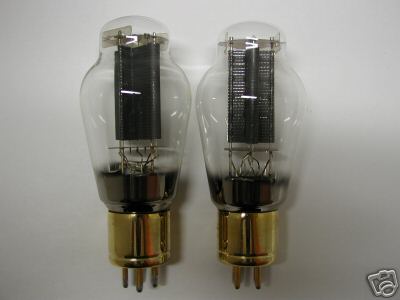 Two triode vacuum tubes |

An example of different designs for vacuum tubes
